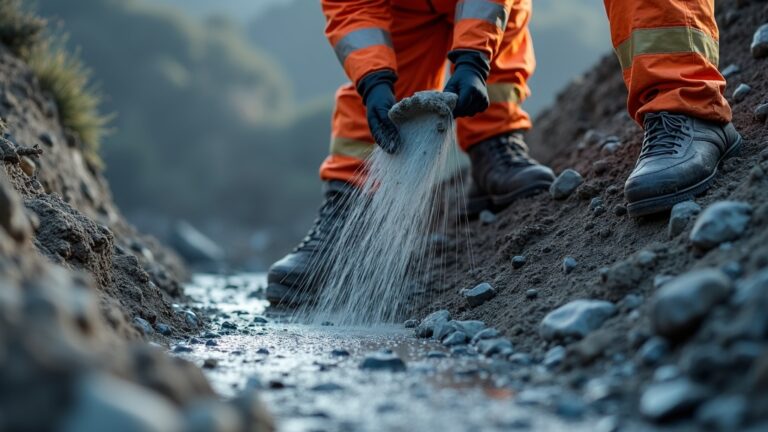
Colloidal water for mining grout systems
Colloidal water creates stable mining grout. Learn how high-shear mixers optimize fluid dynamics and particle dispersion for underground tunneling and grout.
Table of Contents
- Article Snapshot
- By the Numbers
- Introduction
- Fluid Dynamics in Colloidal Water
- High-Shear Mixing Equipment
- Mining and Tunneling Applications
- Optimizing Colloidal Suspensions
- Questions from Our Readers
- Comparison of Mixing Methods
- Practical Tips
- Before You Go
Article Snapshot
Colloidal water is the foundational fluid phase in industrial grout suspensions, enabling fine cementitious particles to remain evenly dispersed. This article examines how high-shear mixing plants achieve optimal viscosity and particle hydration for critical underground mining and tunneling ground stabilization projects.
By the Numbers
Colloidal water and high-shear mixing are critical for modern geotechnical engineering. Here are the key metrics regarding colloidal grout systems:
- Colloidal grouts can penetrate rock fractures as small as 0.05 mm, compared to 0.2 mm for standard cement slurries (Weaver, 1991)[1].
- High-shear colloidal mixers typically operate at rotor speeds exceeding 1,500 RPM to achieve optimal particle dispersion (Houlsby, 1990)[2].
- Optimized colloidal micro-cement grouts often utilize a water-to-cement (w/c) ratio between 0.8 and 1.2 for maximum suspension stability (Warner, 2004)[3].
- Properly mixed colloidal suspensions exhibit less than 2% bleed water separation, ensuring uniform curing in deep boreholes (Weaver, 1991)[1].
Introduction
Colloidal water serves as the critical base fluid for creating stable grout suspensions in heavy civil engineering. When fine particles like bentonite or micro-cement are introduced to this fluid, they do not simply dissolve; instead, they form a complex colloidal slurry. Achieving the right balance of viscosity and shear rate is essential for deep foundation grouting and dam sealing. If the fluid dynamics are poorly managed, particle agglomeration occurs, leading to blocked injection lines and weak ground stabilization. This guide explores the mechanics of colloidal fluid preparation, the high-shear mixing equipment required, and the specific applications in underground construction. We will also clarify common misconceptions about colloidal solutions before detailing best practices for operating a modern grout plant.
Fluid Dynamics in Colloidal Water
The physical behavior of colloidal water dictates the overall stability and injectability of the final grout mixture. In a true colloidal suspension, the water acts as the continuous phase, while microscopic solid particles remain evenly distributed without settling. This requires careful management of fluid dynamics to prevent particle agglomeration. When dry cementitious powders or bentonite clays meet the water, rapid hydration must occur. High-shear forces break down particle clusters, ensuring that the electrical double layer of each particle remains intact. This repulsive force keeps the colloidal mixture stable over long pumping distances.
The stability of these suspensions is governed by the DLVO theory, which describes the balance between van der Waals attraction and electrostatic repulsion. In contrast to simple cement slurries that settle rapidly and cause blockages, engineered colloidal suspensions maintain structural integrity and predictable fluid behavior over extended pumping durations (Houlsby, 1990)[2].
Water quality also plays a massive role in these fluid dynamics. Hard water containing high levels of calcium or magnesium can disrupt the chemical balance, causing the colloidal slurry to flocculate prematurely. Engineers must test the water source and adjust the mix design to maintain optimal viscosity before the slurry pump pushes it into the borehole.
High-Shear Mixing Equipment
Producing a true colloidal mixture requires specialized high-shear mixers that operate at significantly higher velocities than standard paddle mixers. A conventional mix tank relies on simple agitation, which is sufficient for basic backfill but entirely inadequate for micro-cement injection. High-shear colloidal grout mixers utilize a rotor-stator mechanism. The rotor spins at high RPMs, forcing the colloidal fluid through narrow gaps in the stator. This creates intense hydraulic shear, cavitation, and impact forces that completely de-agglomerate the dry particles.
The result is a highly homogeneous colloidal solution with maximum surface area exposure for hydration. For detailed specifications on selecting the right equipment for your specific ground conditions, reviewing a comprehensive colloidal mixers equipment guide is highly recommended for procurement teams. Proper equipment selection ensures that the mix tank delivers a consistent product batch after batch.
Maintenance of these high-speed systems is equally critical. The rotor and stator components experience significant wear from abrasive cementitious particles. Regular inspection prevents unexpected downtime on active tunneling sites. For a basic introduction to our site and plant operations, you can read our initial hello world announcement, which covers foundational maintenance schedules for heavy mixing gear.
Mining and Tunneling Applications
Underground construction environments demand highly penetrative grouts that can navigate micro-fractures in rock masses. In mining and tunneling, standard cement grouts often fail to penetrate fissures smaller than 0.1 millimeters. By utilizing colloidal water as the base and processing it through a high-shear mixer, engineers create a grout with a drastically reduced particle size distribution. This allows the colloidal slurry to flow deep into tight rock joints, providing superior ground stabilization and water ingress control.
Dam sealing and deep foundation grouting also benefit immensely from this technology. When injecting grout beneath a dam curtain, the fluid must travel long distances through narrow pathways without separating. The stable nature of a well-mixed colloidal suspension prevents bleed water from separating from the cement matrix, ensuring a solid, impermeable barrier once cured.
Just as structural engineers rely on rigorous material testing to verify concrete strength, grouting specialists must avoid poorly mixed slurries that fail to meet permeability and structural claims. Relying on proven colloidal science and standardized mixing protocols ensures that underground construction projects meet rigorous safety and longevity standards (Warner, 2004)[3].
Optimizing Colloidal Suspensions
Achieving peak performance from a colloidal slurry involves strict control over mix times, water quality, and additive sequencing. The order in which materials are added to the mix tank drastically affects the final viscosity. Typically, bentonite is pre-hydrated in the colloidal water before introducing micro-cement. This prevents the cement from competing for water molecules, allowing the bentonite to fully swell and create a supportive gel structure.
Temperature control is another vital optimization factor. In deep mining shafts, ambient rock temperatures can accelerate the hydration process, causing the grout to flash-set inside the injection lines. Engineers often use chilled water or retarding admixtures to manage the cure time. Continuous inline viscosity monitoring allows operators to adjust the shear rate in real-time, ensuring the colloidal fluid remains pumpable.
While some unverified chemical additives claim to magically solve all ground stabilization issues without substantial scientific evidence, true engineering relies on rigorous fluid mechanics and proven colloidal science. Browse our technical updates in the category/uncategorized archive for more insights on optimizing mix designs for challenging geological formations.
Questions from Our Readers
What is the difference between colloidal water and standard mixing water?
Standard mixing water simply acts as a vehicle to wet cement particles, often resulting in separation and bleed water. Colloidal water, when processed through a high-shear mixer, becomes the continuous phase of a stable colloidal suspension. The intense shear forces integrate the water at a microscopic level with the solid particles, creating a homogeneous fluid that resists separation, maintains consistent viscosity, and penetrates micro-fractures effectively without clogging injection lines.
How does a high-shear mixer prevent particle agglomeration?
A high-shear mixer utilizes a rotor-stator configuration that spins at extremely high velocities. As the colloidal mixture is forced through the narrow gaps between the rotor and stator, it experiences intense hydraulic shear, cavitation, and impact forces. These mechanical actions physically tear apart particle clusters and agglomerates, ensuring that every individual cement or bentonite particle is fully separated and encapsulated by the water phase, which is essential for achieving maximum penetrability in rock fractures.
Can colloidal grout be used for dam sealing?
Yes, colloidal grout is highly effective for dam sealing and curtain grouting. Because the high-shear mixing process creates a very fine, stable colloidal slurry with minimal bleed water, the grout can travel long distances through narrow rock fissures beneath the dam foundation. Once cured, it forms a dense, impermeable barrier that significantly reduces water seepage and uplift pressure, thereby enhancing the structural stability and longevity of the dam infrastructure.
Why is fluid viscosity critical in tunneling applications?
Fluid viscosity determines how easily the grout can be pumped through long hoses and injected into the surrounding rock mass. If the viscosity is too high, the slurry pump will struggle, and the grout may fail to penetrate fine fractures, leaving voids in the ground. If the viscosity is too low, the grout may travel too far, wasting material and failing to build adequate pressure for proper ground stabilization. Maintaining precise viscosity ensures optimal penetration and structural support.
Comparison of Mixing Methods
Selecting the right mixing technology is crucial for achieving the desired fluid properties in ground stabilization projects. The method chosen directly impacts particle dispersion, hydration efficiency, and the overall penetrability of the final grout. Below is a comparison of standard mixing versus high-shear colloidal mixing.
| Feature | Standard Paddle Mixer | High-Shear Colloidal Mixer |
|---|---|---|
| Shear Rate | Low to Moderate | Extremely High |
| Particle Dispersion | Poor, prone to clumping | Excellent, breaks down agglomerates |
| Colloidal Water Integration | Incomplete hydration | Full fluid phase integration |
| Best Application | Basic backfill and bulk filling | Micro-fracture injection and dam sealing |
Practical Tips
Operating a grout plant efficiently requires attention to detail and adherence to proven best practices. Implementing the following strategies will help you maintain consistent grout quality and extend the lifespan of your mixing equipment.
- Pre-hydrate bentonite: Always allow bentonite to fully swell in the colloidal water before adding micro-cement. This prevents the cement from stealing water and ensures a stable gel structure.
- Monitor water temperature: In hot climates or deep mining shafts, use chilled water to prevent flash-setting. Keeping the fluid temperature stable ensures predictable cure times and prevents blockages in the injection lines.
- Inspect rotor-stator gaps: High-shear mixers experience significant wear. Measure the clearance between the rotor and stator weekly to ensure the equipment continues to generate the necessary shear forces for proper particle dispersion.
Additionally, always calibrate your inline viscosity meters regularly. Accurate readings allow operators to make real-time adjustments to the mix design, ensuring the colloidal slurry meets the exact specifications required for the geological conditions at hand.
Before You Go
Mastering the use of colloidal water and high-shear mixing technology is essential for successful underground construction, dam sealing, and mining operations. By understanding fluid dynamics and maintaining your equipment, you ensure stable, penetrable grout suspensions that stand the test of time. To continue improving your site operations and learn more about advanced grouting techniques, read our introductory plant guide for more foundational insights.
Sources & Citations
- Weaver, K. D. (1991). Rock Grouting Principles and Practice. Elsevier Science.
https://www.sciencedirect.com/book/9780444885616/rock-grouting - Houlsby, A. C. (1990). Construction and Design of Cement Grouting: A Guide to Grouting in Foundations. John Wiley & Sons.
https://www.wiley.com/en-us/Construction+and+Design+of+Cement+Grouting-p-9780471516422 - Warner, J. (2004). Practical Handbook of Grouting. John Wiley & Sons.
https://www.wiley.com/en-us/Practical+Handbook+of+Grouting-p-9780471457596