Backfill a Trench: Methods, Materials, and Best Practices
Learn the correct procedures to backfill a trench on construction and mining sites. This guide covers material selection, compaction standards, lift thickness specifications, and quality control testing methods for durable ground restoration.
Table of Contents
- Material Selection for Trench Backfill
- Compaction Standards and Lift Thickness
- Quality Control Testing Requirements
- Special Considerations for Mining Backfill Grouting
- Frequently Asked Questions
- Comparison: Mechanical vs. Slurry Backfill Methods
- Practical Tips for Trench Backfill Operations
- Final Thoughts on Backfill a Trench
Quick Stats: Trench Backfill
- Recommended lift thickness for trench backfill: 4-6 inches per lift (BigRentz, 2025)[1]
- Final foot of native backfill compaction requirement: 95 percent relative compaction (City of Roseville Engineering Department, 2024)[2]
- Maximum allowable rock or lump diameter in backfill material: 4 inches (City of Roseville Engineering Department, 2024)[2]
Every excavation project eventually requires restoring the ground to its original condition, and knowing how to properly backfill a trench is essential for long-term stability and safety. Whether the work involves utility lines, foundation footings, or underground mining voids, the principles of material selection, layered placement, and mechanical compaction remain consistent. Municipal engineering authorities and construction standards bodies have established clear specifications to prevent future settlement, pipe damage, and surface failure. This article examines the core requirements for trench backfill operations, from material constraints to compaction verification, and explores how these principles apply in both civil construction and mining environments.
Material Selection for Trench Backfill
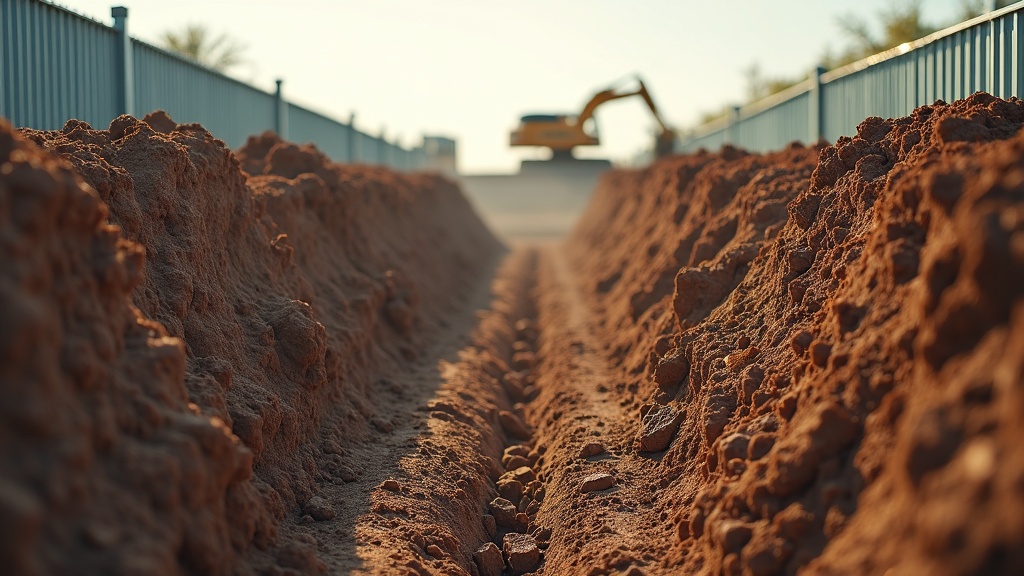
The choice of backfill material directly affects the long-term performance of a restored trench. Municipal standards require that all material used to backfill a trench contain no organic matter and no rocks or soil lumps exceeding four inches in diameter. The maximum cobble size must not exceed the depth of the maximum compaction lift for the equipment being used (City of Roseville Engineering Department, 2024)[2]. These restrictions prevent voids and ensure uniform compaction across each lift.
Common backfill materials include native soil, imported granular fill, aggregate base, and controlled low-strength material (CLSM), also known as flowable fill. Native soil is the most economical option when it meets gradation and plasticity requirements. For joint utility trenches, specifications often call for sand compacted to 85 percent relative compaction immediately above the utilities, followed by native material compacted to higher densities near the surface (City of Roseville Engineering Department, 2024)[2]. When native soil is too clay-rich or contains excessive moisture, imported granular material provides better drainage and compaction characteristics.
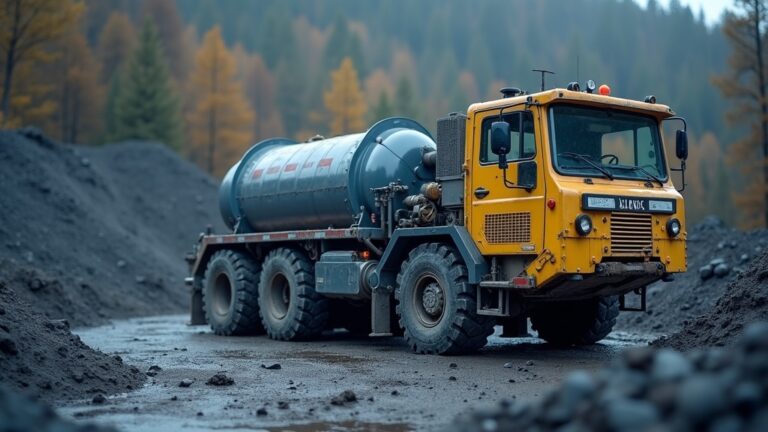
In mining applications, the material used to backfill a trench or void often differs significantly from civil construction. Mining operations frequently employ cemented backfill or paste fill, which requires specialized mixing and delivery equipment. These materials are designed to provide both ground support and void filling in underground environments. For operations requiring precise slurry mixing, specialized colloidal grout mixing equipment ensures consistent material properties for backfill grouting applications.
Compaction Standards and Lift Thickness
Compaction is the most critical step when crews backfill a trench. Without adequate densification, the fill material will settle over time, causing pavement cracking, pipe misalignment, or foundation distress. Construction guidance commonly recommends placing backfill in layers of four to six inches with chosen material and compacting each layer before adding the next (BigRentz, 2025)[1]. For foundation backfill, lift thickness may increase to six to eight inches to maintain lateral stability (BigRentz, 2025)[1].
Municipal compaction standards specify different density targets depending on depth. For joint utility trenches, sand shading material above utilities must be compacted to 85 percent relative compaction. Native backfill material within one foot of final grade must reach 90 percent relative compaction, and the final one foot must achieve 95 percent relative compaction (City of Roseville Engineering Department, 2024)[2]. These graduated requirements recognize that surface layers bear the greatest loads from traffic and environmental exposure.
The equipment used for compaction varies with trench width, depth, and access constraints. Walk-behind vibratory plate compactors work well for narrow trenches, while larger trenches may require ride-on vibratory rollers or impact rammers. Moisture content must be controlled to obtain the optimum density for the native soil type encountered (City of Roseville Engineering Department, 2024)[2]. Finishing the process by watering down the backfill helps it settle and solidify (BigRentz, 2025)[1].
Quality Control Testing Requirements
Verifying that compaction meets specifications requires systematic testing by qualified personnel. Municipal standards mandate that trench backfill compaction be tested and certified by a licensed geotechnical engineer, with all testing conforming to ASTM D1557 test methods (City of Roseville Engineering Department, 2024)[2]. ASTM D1557 establishes the laboratory procedure for determining the maximum dry density and optimum moisture content of soils, which serves as the benchmark for field compaction measurements.
Field testing typically uses nuclear density gauges or sand cone tests to measure in-place density. For road base over backfilled trenches, compaction testing is commonly scheduled once per 150 millimeter lift at four sites per 20 lineal meters (Reddit r/Construction professional discussion, 2025)[3]. This frequency ensures that each lift meets specifications before the next layer is placed, preventing the need for costly rework after the trench is fully closed.
Documentation of test results forms a critical part of project records. Licensed geotechnical engineers must certify that compaction meets the specified relative compaction percentages for each zone of the trench. When test results fall below requirements, the contractor must recompact the affected area and retest until compliance is achieved. This rigorous approach to quality control protects infrastructure investments and public safety.
Special Considerations for Mining Backfill Grouting
In underground mining, the principles used to backfill a trench on the surface translate to larger-scale void filling operations, but with distinct differences in material properties and placement methods. Mining backfill grouting involves pumping cementitious slurries into underground voids to provide ground support, improve ore recovery, and manage subsidence. The equipment requirements for these operations differ substantially from surface trench work.
Colloidal grout mixers produce homogeneous slurries by dispersing cement and other solids through a high-shear mixing chamber. This ensures that the grout achieves consistent viscosity and strength characteristics before being pumped underground. For operations that need to understand colloidal grout plant operation, the process involves precise control of water-to-cement ratios and mixing time to produce a stable suspension that will not segregate during transport or placement.
Backfill grouting in mining often uses paste fill, which incorporates tailings from the milling process as the aggregate component. This approach reduces surface tailings storage requirements while providing structural fill underground. The rheology of paste fill must be carefully controlled to ensure it flows through distribution pipelines but does not segregate or dilute upon placement. These specialized applications highlight how the fundamental goal to backfill a trench or void adapts to different industrial environments while maintaining the core principles of material selection, placement control, and quality verification.
Important Questions About Trench Backfill
What is the best material to backfill a trench?
The best material depends on the trench location and intended use. Native soil is economical when it meets gradation and plasticity requirements and contains no organic material or rocks exceeding four inches in diameter. Imported granular fill provides better drainage and compaction characteristics for utility trenches. Controlled low-strength material (flowable fill) eliminates compaction requirements in tight spaces. For joint utility trenches, sand is typically used immediately above utilities to protect them from sharp rocks.
How thick should each lift be when I backfill a trench?
Standard trench backfill requires lifts of four to six inches for most applications. Each lift must be compacted before the next layer is placed. For foundation backfill, lift thickness may increase to six to eight inches to maintain lateral stability. The maximum cobble size in the backfill material must not exceed the depth of the maximum compaction lift for the equipment used. Thicker lifts may not achieve uniform density and can lead to future settlement.
What compaction percentage is required for trench backfill?
Compaction requirements vary by depth and jurisdiction. In many municipal standards, sand shading above utilities must be compacted to 85 percent relative compaction. Native material within one foot of final grade requires 90 percent relative compaction, and the final foot must achieve 95 percent relative compaction. These percentages are based on the maximum dry density determined by ASTM D1557 laboratory testing. A licensed geotechnical engineer must certify that compaction meets specifications.
How long should concrete cure before backfilling a foundation trench?
Construction guidance commonly recommends waiting five to seven days after pouring concrete before placing trench backfill along foundation walls. This curing period allows the concrete to reach sufficient strength to resist lateral earth pressures during compaction. Placing backfill too early can damage the foundation structure or cause cracking. In cold weather or when using slower-curing concrete mixes, longer curing times may be necessary.
Comparison: Mechanical vs. Slurry Backfill Methods
When planning how to backfill a trench, operators typically choose between mechanical compaction of granular material and placement of flowable slurry. Each method has distinct advantages depending on site conditions, access constraints, and performance requirements. The following table compares the key characteristics of these two approaches.
| Characteristic | Mechanical Compaction | Slurry (CLSM) Backfill |
|---|---|---|
| Material type | Native soil, granular fill, aggregate base | Cementitious slurry, flowable fill, grout |
| Placement method | Layered lifts of 4-6 inches | Pumped or poured in single or multiple lifts |
| Compaction equipment | Vibratory plates, rollers, impact rammers | None required – material self-levels |
| Quality testing | Field density tests per ASTM D1557 | Slump, compressive strength, setting time |
| Typical application | Utility trenches, road base, foundations | Narrow trenches, confined spaces, mining voids |
Practical Tips for Trench Backfill Operations
Successful trench backfill operations require attention to detail at every stage. The following practices help ensure durable results and compliance with specifications.
- Pre-wet dry materials before placing them in the trench. Moisture content must be controlled to achieve optimum density for the soil type. Dry material will not compact properly, while overly wet material may pump or rut under compaction equipment.
- Use appropriate compaction equipment for the trench dimensions. Walk-behind vibratory plate compactors work well for narrow trenches up to 24 inches wide. Wider trenches may require ride-on rollers or multiple passes with smaller equipment to achieve uniform density across the full width.
- Schedule compaction testing at the frequency specified in the project documents. Testing once per lift at regular intervals along the trench identifies problem areas before they are buried under subsequent lifts. Maintain records of all test results for project closeout documentation.
- Consider flowable fill for trenches with limited access or complex utility configurations. Controlled low-strength material eliminates the need for mechanical compaction and reduces the risk of pipe damage. It also provides excellent support for future excavations because it remains excavatable at low cement contents.
For more about Backfill a trench, see get expert advice on backfill a trench.
Final Thoughts on Backfill a Trench
Properly executed trench backfill operations prevent costly settlement, protect underground utilities, and ensure long-term surface stability. Whether working with native soil on a municipal utility project or pumping cementitious slurry in a mining operation, the fundamental requirements remain the same: select suitable material, place it in thin lifts, compact each layer to the specified density, and verify the results through geotechnical testing. For more detailed guidance on equipment selection and project planning, explore our trench backfill resources for comprehensive technical information.
Useful Resources
- 4-Step Guide to Backfilling Trenches and Foundations. BigRentz.
https://www.bigrentz.com/blog/backfill-trench - Section 31: Trench Backfill – Design and Construction Standards. City of Roseville Engineering Department.
https://www.roseville.ca.gov/Documents/Development%20Services/Engineering%20Land%20Development/Construction%20Management%20and%20Inspection/Design%20and%20Construction%20Standards/Construction%20Standards/Sec%2031%20Trench%20Backfill.pdf - How do you backfill a utility trench layer depth? Reddit r/Construction.
https://www.reddit.com/r/Construction/comments/ccuaqh/how_do_you_backfill_a_utility_trench_layer_depth/